
In Vitro Fertilization (IVF) is one of the most effective fertility treatments available today. However, many couples considering IVF often ask a common question: “How long does one IVF cycle take?” Understanding the timeline can help you prepare emotionally, physically, and practically for the journey ahead.
Overview of an IVF Cycle Timeline
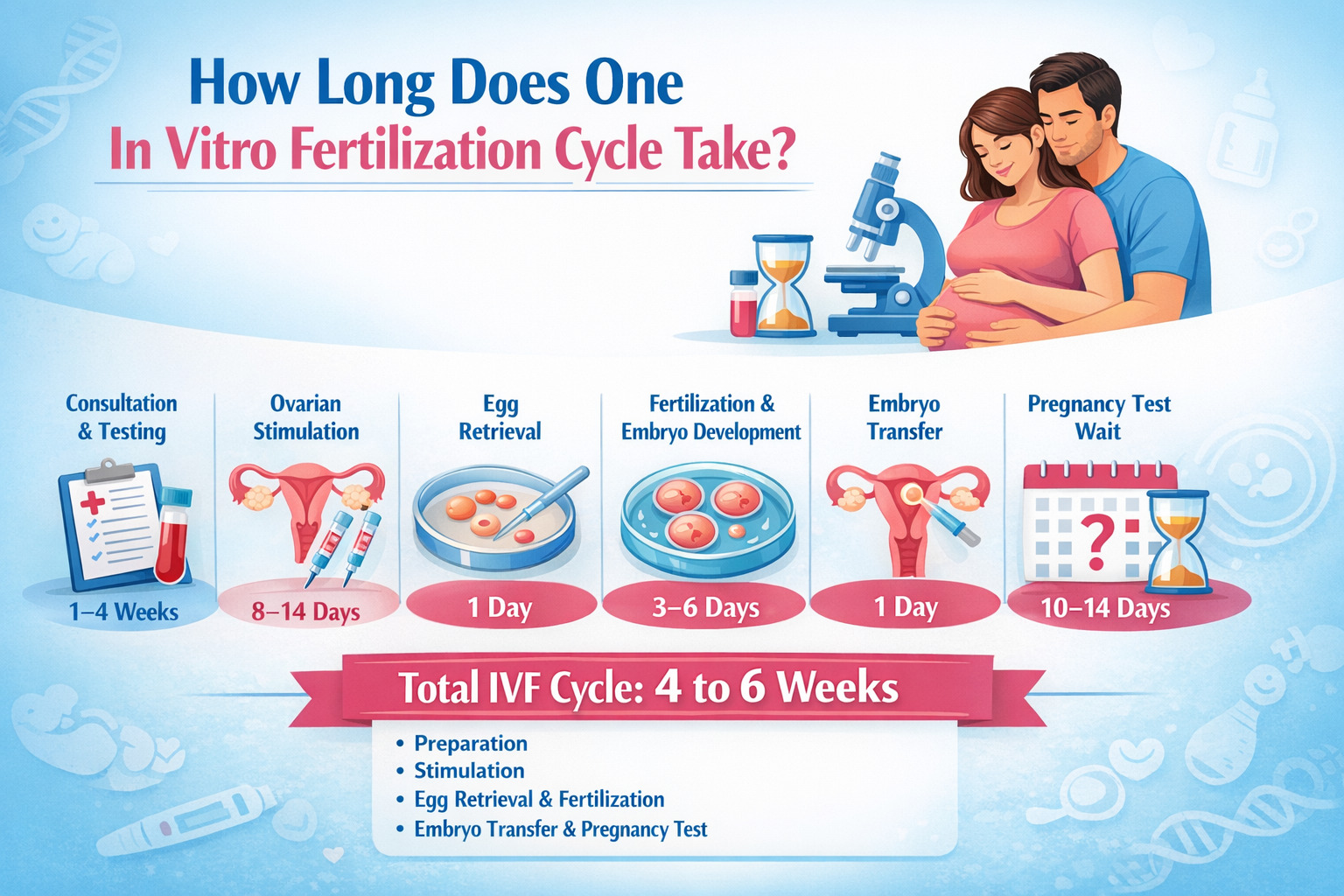
A single IVF cycle typically takes about 4 to 6 weeks from the start of ovarian stimulation to the pregnancy test. However, when you include initial consultations, diagnostic tests, and preparation, the entire process may extend over several weeks or even a few months depending on individual circumstances.
It’s important to remember that every patient’s journey is unique. Factors such as age, hormonal response, underlying health conditions, and treatment protocols can influence the overall duration.
Step-by-Step IVF Timeline
Let’s break down the IVF cycle into its key stages to better understand where the time goes.
1. Initial Consultation and Pre-Treatment Testing (1–4 Weeks)
Before starting IVF, your fertility specialist will conduct a thorough evaluation. This includes blood tests, ultrasound scans, and sometimes a semen analysis for the male partner. These tests help assess fertility health and create a personalized treatment plan.
This phase can take anywhere from 1 to 4 weeks, depending on how quickly tests are completed and results are reviewed.
2. Ovarian Stimulation (8–14 Days)
Once the cycle begins, hormonal medications are prescribed to stimulate the ovaries to produce multiple eggs instead of just one. During this time:
- Daily injections are administered
- Regular monitoring through ultrasounds and blood tests is required
This stage usually lasts around 8 to 14 days, depending on how the body responds to medication.
3. Egg Retrieval (1 Day)
When the eggs are mature, a minor surgical procedure called egg retrieval is performed. It is typically done under mild sedation and takes about 20–30 minutes.
Although the procedure itself is completed in a single day, patients may need a short recovery period.
4. Fertilization and Embryo Development (3–6 Days)
After retrieval, the eggs are fertilized with sperm in a laboratory. The resulting embryos are monitored for several days to assess their development.
This stage usually takes 3 to 6 days, during which the healthiest embryos are selected for transfer.
5. Embryo Transfer (1 Day)
The embryo transfer is a simple and painless procedure where one or more embryos are placed into the uterus. It is usually done without anesthesia and takes only a few minutes.
In some cases, embryos may be frozen and transferred in a later cycle, which can extend the overall timeline.
6. The Two-Week Wait (10–14 Days)
After the embryo transfer comes what many call the most emotionally challenging phase—the waiting period. Patients must wait 10 to 14 days before taking a pregnancy test to determine if the treatment was successful.
Total Duration of One IVF Cycle
When combining all stages, a typical IVF cycle looks like this:
- Preparation: 1–4 weeks
- Stimulation: 8–14 days
- Egg retrieval & fertilization: 3–6 days
- Embryo transfer: 1 day
- Pregnancy test: 10–14 days
Overall, the active IVF cycle generally takes 4 to 6 weeks, while the entire process (including preparation) may take longer.
Factors That Can Affect the Timeline
While the standard timeline provides a general idea, several factors can influence how long your IVF cycle takes:
- Individual response to medications: Some patients may require longer stimulation periods
- Medical conditions: Hormonal imbalances or underlying health issues can delay the process
- Use of frozen embryos: Frozen embryo transfer (FET) cycles may add extra time
- Additional procedures: Genetic testing or embryo freezing can extend the timeline
- Clinic protocols: Different fertility centers may follow slightly different schedules
Because of these variables, it’s essential to have realistic expectations and maintain flexibility throughout the treatment.
Why Understanding the Timeline Matters
Knowing how long an IVF cycle takes helps patients:
- Plan work and personal commitments
- Prepare emotionally for each stage
- Reduce anxiety by understanding what to expect
- Stay committed throughout the process
IVF is not just a medical procedure—it’s a journey that requires patience, resilience, and support.
Final Thoughts
A single IVF cycle typically takes about 4 to 6 weeks, but the complete journey may span several weeks or months depending on individual needs. While the timeline may seem lengthy, each step plays a crucial role in maximizing the chances of a successful pregnancy.
If you’re considering IVF, consulting with an experienced fertility specialist can provide a clearer, personalized timeline and guide you through every stage with confidence.
